

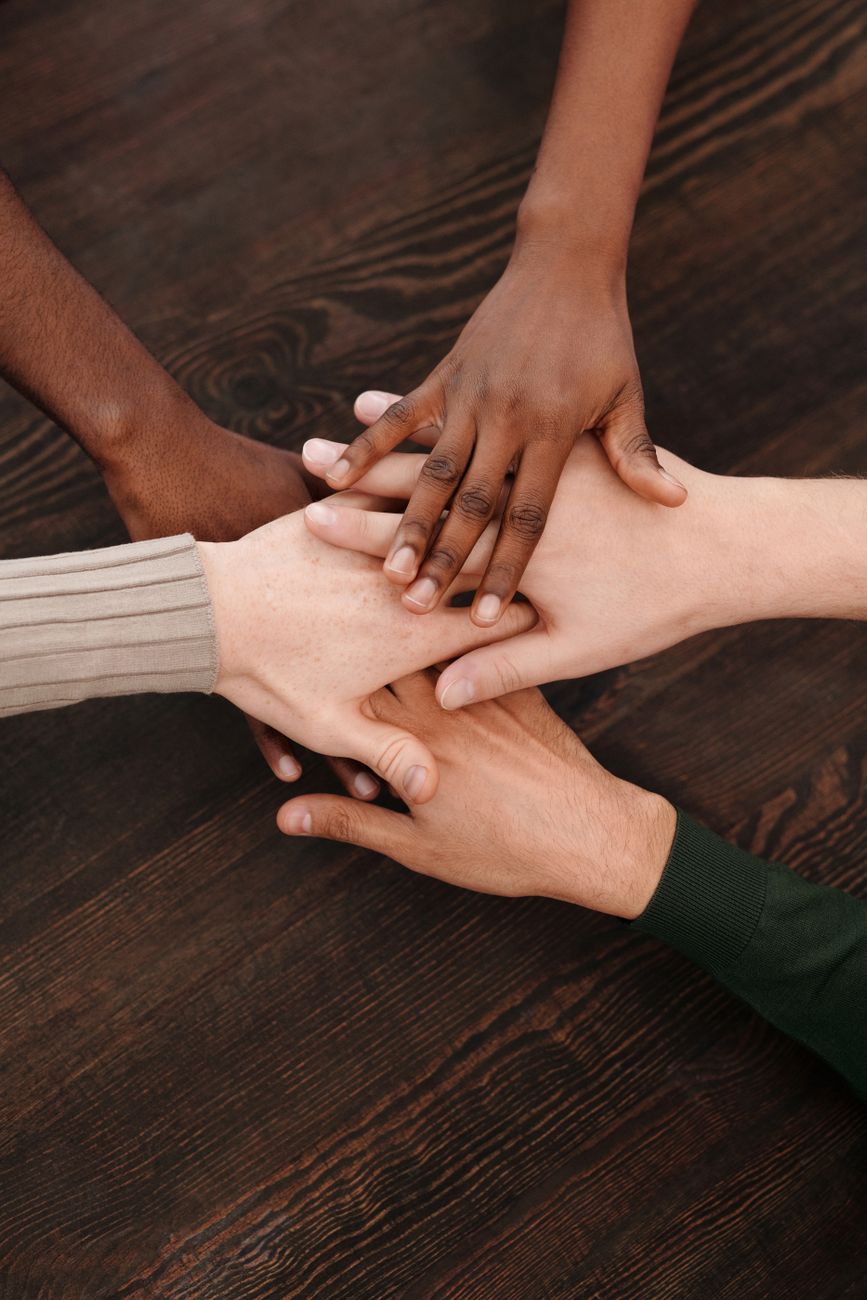
An Interfaith Reflection on Human Dignity, Diversity, and Our Responsibility to One Another
I’ve been thinking a great deal lately about the value of human life, and more specifically, how we have come to determine what makes a person valuable. We live in a society that places extraordinary importance on what we accomplish, what we possess, and how much influence we have over the world around us. We admire successful careers, impressive educational credentials, beautiful homes, and substantial bank accounts. We celebrate people who have achieved positions of power and authority, and we often look to them as examples of what it means to have lived a successful life. There’s nothing inherently wrong with celebrating accomplishment, of course. But I wonder whether, somewhere along the way, we’ve confused the things a person accomplishes with the value of the person themselves.
Think about how we speak about one another. We ask people what they do for a living, how much money they make, where they went to school, and what they’ve accomplished. We even use the word worth when discussing someone’s financial circumstances. We calculate their net worth, as though the accumulation of wealth could somehow tell us something meaningful about the value of their existence. And while we understand that this is an economic expression, I wonder how deeply this way of thinking has shaped our understanding of humanity. Have we become so accustomed to measuring everything that we’ve begun trying to measure the immeasurable? Have we become so concerned with what people contribute to society that we’ve forgotten to recognize the sacredness of their existence?
What troubles me most is that this way of thinking doesn’t stop with money or professional success. It extends into the ways we understand race, religion, sexuality, gender, culture, and even the ideas that people hold about the world. We live in a society where some people are celebrated as respectable and successful simply because they fit a particular cultural expectation, while others are treated with suspicion, hostility, or contempt because their lives look different. We see people rejected by their families because of whom they love. We see religious communities condemning those who understand God differently. We see people judged by the color of their skin, the language they speak, or the traditions they inherited from their ancestors. We see intellectuals, artists, philosophers, and those who question established ways of thinking dismissed as threats rather than welcomed as people who might help us understand the world more deeply.
And I find myself asking: How did we get here? How have we come to a place where another person’s existence can be perceived as a threat simply because it is different from our own?
Imagine, for a moment, a young person sitting alone in their bedroom, trying to find the courage to tell their parents who they really are. They love their family, and they desperately want to be loved in return, but they’re afraid that revealing something deeply personal about themselves might cost them the relationships they treasure most. Imagine a Muslim woman walking into a public place, wondering whether the headscarf she wears as an expression of devotion will make her the target of someone’s hatred. Imagine a person of color who has spent their life working, studying, loving, and contributing to their community, yet still encounters people who judge their character before they’ve spoken a single word. Imagine an elderly person who can no longer work and begins to wonder whether their life has any value now that they are no longer considered productive.
These are not simply examples of discrimination or social inequality. These are human lives. These are people who wake up in the morning with hopes for the day ahead, who carry memories of people they’ve loved, who have experienced joy and heartbreak, who worry about their families, and who long to be understood and accepted. They are people whose lives contain an entire world of experiences that we may never fully know.
And yet, how easily we forget this when we begin seeing one another through the narrow categories we’ve created.
I find this especially troubling when I consider the extraordinary spiritual wisdom humanity has inherited across thousands of years. We have been given teachings about compassion, humility, love, justice, and the sacredness of existence from traditions that developed in different places, cultures, and historical circumstances. These traditions don’t always agree with one another. They offer different understandings of God, the nature of reality, the purpose of life, and what happens beyond death. But across these differences, we repeatedly encounter invitations to recognize something profoundly significant about the lives of others.
In the Book of Genesis, we read that humanity was created in the image of God. Genesis 1:27 teaches that God created human beings in the divine image. Within Jewish and Christian thought, this understanding has inspired generations of reflection on the inherent dignity of human life. Think about what that means. Human dignity is not something bestowed upon us by a government, an employer, a religious institution, or a social community. It is not something we acquire when we become successful or respectable. It belongs to us because of who we are. The person living in poverty bears that dignity just as surely as the person living in extraordinary wealth. The person who has been rejected by society possesses it just as fully as the person who has been celebrated by society.
In the Bhagavad Gita, we encounter a beautiful vision of spiritual unity. Chapter 6, verse 29, describes the spiritually disciplined person as one who sees the Self in all beings and all beings in the Self. Within its Hindu philosophical context, this teaching invites us into a deeper recognition of the relationship between existence and ultimate reality. We are encouraged to look beyond the apparent separateness of individual lives and recognize a profound spiritual interconnectedness. How might our relationships change if we approached one another with that awareness? How might our understanding of humanity deepen if we stopped seeing differences as boundaries that separate us and began recognizing the mystery of life that exists within us all?
The Buddhist Dhammapada offers another powerful teaching. In verses 129 and 130, we are reminded that living beings fear violence and cherish life, and that by recognizing ourselves in others, we should refrain from causing harm. I find something deeply moving about the simplicity of this teaching. It doesn’t ask us to determine whether someone has earned our compassion. It invites us to recognize that another being experiences life with a vulnerability not so different from our own. They, too, can suffer. They, too, can experience fear. They, too, desire peace and freedom from harm.
And in the Qur’an, Surah Al-Hujurat, verse 13, we encounter a teaching that I find especially meaningful when reflecting on human diversity. Humanity is described as having been created into different peoples and tribes so that we might come to know one another. Consider the beauty of that invitation. Our differences are not unfortunate circumstances that we must learn to tolerate. They can become opportunities for relationship, understanding, and the discovery of wisdom beyond our own experiences.
We don’t have to pretend that these traditions teach exactly the same theology to appreciate the spiritual significance of what they offer. In fact, I think doing so would diminish the very diversity we’re seeking to honor. Their differences matter. Their histories matter. Their distinctive understandings of existence matter. And perhaps that is part of what makes the spiritual heritage of humanity so extraordinary. Across different cultures and centuries, people have sought to understand the mystery of existence, and each tradition has contributed something to humanity’s ongoing exploration of what it means to live a meaningful life.
I wonder why we so often approach religious and cultural differences as problems that need to be solved rather than opportunities to encounter something beyond ourselves. Why must someone else’s understanding of God threaten our own? Why must another person’s way of loving diminish the love we experience? Why must the existence of different cultures, philosophies, and identities become a competition over which is superior?
What if human diversity is not something we need to overcome, but something we are called to cherish?
Think about the extraordinary variety of human existence. Across the world, people express love through different languages, celebrate life’s important moments through different ceremonies, understand the sacred through different traditions, and create beauty through countless forms of art, music, literature, and philosophy. Some people encounter God through formal prayer and religious devotion. Others find the sacred in silence, nature, relationships, or acts of service. Some understand existence through the teachings of their ancestors, while others spend their lives questioning inherited assumptions and searching for new ways of understanding the world.
And each of these lives contributes to the remarkable diversity of the human experience.
I don’t believe we need to become identical to recognize our shared humanity. I don’t believe that unity requires uniformity. In fact, I wonder whether our insistence that others should think, believe, love, and live as we do reveals how uncomfortable we’ve become with the mystery of existence itself. Perhaps we have become so attached to our own understanding of the world that we struggle to appreciate the possibility that someone else’s experience might reveal something we have not yet understood.
This doesn’t mean that every belief or action is equally compassionate, just, or worthy of acceptance. There are ideas that cause genuine harm, and there are systems of oppression that must be challenged. But there is an important distinction between challenging an idea and denying the dignity of the person who holds it. We can disagree profoundly with another human being without concluding that their life is less sacred than our own.
And this brings me to something I’ve been reflecting on more deeply: the difference between compassion and reverence.
We often speak about the need for greater compassion in our world. We encourage people to be kind, to care for those who are suffering, and to help those who are vulnerable. These are beautiful and fundamental expressions of our spiritual lives. But I wonder whether compassion alone fully captures what we’re being invited to cultivate.
Compassion asks us to respond to another person’s suffering. Reverence asks us to recognize the sacredness of their existence.
When we encounter someone who is hungry, compassion may inspire us to offer food. When we encounter someone who is grieving, compassion may move us to sit beside them and offer comfort. When we encounter someone who has been mistreated, compassion may encourage us to help them find safety and support. But reverence asks us to recognize that this person’s dignity existed before their suffering began and will remain long after their suffering has ended. Their life is not sacred because they need our help. Their life is sacred because it is a life.
And I think we’ve lost something essential when we forget how to approach one another with that kind of reverence.
We have become extraordinarily skilled at evaluating people. We evaluate their intelligence, productivity, appearance, beliefs, morality, social standing, and influence. Sometimes we do this so quickly that we barely recognize it happening. We encounter someone, notice something about their appearance or behavior, and immediately begin constructing an understanding of who they are. Before we’ve heard their story, we’ve already made judgments about their character. Before we’ve learned what brings them joy or what keeps them awake at night, we’ve already placed them into a category.
But what would happen if we began encountering people differently?
What if, when we met someone whose beliefs were different from our own, our first response was curiosity rather than suspicion? What if, when we encountered someone whose culture was unfamiliar, we allowed ourselves to appreciate the beauty of their traditions rather than immediately comparing them to ours? What if we could look at someone who possesses absolutely nothing of material value and recognize that their life is no less significant than the life of someone who possesses everything?
I think contemplative spirituality offers us a beautiful way of beginning this work.
In contemplation, we learn to sit quietly without needing to accomplish anything. We practice releasing our constant need to analyze, evaluate, and control our experiences. We allow ourselves to encounter life as it is, rather than continually demanding that it become something else. And through this practice, we may begin to recognize that existence itself possesses a significance that cannot be measured through productivity or achievement.
Consider the experience of sitting beneath a tree on a quiet afternoon. The earth supports us, the wind moves through the branches, and the world continues its extraordinary unfolding around us. We don’t ask the tree what it has accomplished today. We don’t question whether the clouds have contributed enough to justify their existence. We simply encounter the world with a sense of wonder, recognizing beauty in things that have no need to impress us.
Why, then, do we struggle so deeply to extend that same sense of wonder toward human life?
Why do we find it so difficult to look at another person and recognize that their existence is already extraordinary, even if they have accomplished nothing that society considers important?
But there is something else I want us to consider, because I don’t believe recognizing the sacredness of human life is enough if that recognition never influences how we respond to the suffering and injustice around us.
If we truly believe that every human being possesses inherent dignity, then what responsibility does that place upon us?
What happens when we hear someone being mocked because of their religion? What happens when a young person is rejected because of their sexuality? What happens when someone is denied an opportunity because of their race, or when a community is treated with hostility because its members come from another culture? What happens when we witness people being dehumanized through the language of politics, religion, or social conflict?
Do we simply remind ourselves that everyone is sacred and continue with our day? Do we retreat into our spiritual practices, comforted by the knowledge that we personally hold more compassionate beliefs? Or does our recognition of human dignity call us to something more?
I believe it calls us to something more.
If we recognize the sacredness of the human person, then we must also be willing to stand up when that sacredness is denied. We cannot claim to revere human life while remaining comfortably indifferent to the humiliation, exclusion, or persecution of others. We cannot speak beautifully about compassion in our religious communities while allowing our neighbors to be treated as though their lives are somehow less worthy of respect.
And we cannot allow our spiritual lives to become so focused on our own peace that we forget our responsibility to one another.
This doesn’t mean that everyone must become a public activist or devote their lives to political causes. Standing up for human dignity takes many forms. Sometimes it means speaking when someone makes a cruel remark about another person’s identity. Sometimes it means offering friendship to someone who has been excluded. Sometimes it means challenging the assumptions we’ve inherited from our families, communities, or religious traditions. Sometimes it means listening to someone whose experience of the world is so different from ours that we have difficulty understanding it.
And sometimes it requires considerable courage. There may be moments when defending another person’s dignity costs us approval, comfort, or belonging. We may find ourselves disagreeing with people we love or questioning beliefs we’ve held for many years. But if our spiritual convictions mean anything, surely they must be capable of guiding us through those difficult moments.
I think we also need to remember that standing up for the dignity of others doesn’t require us to respond to hatred with hatred. In fact, I would suggest that doing so risks repeating the very pattern we’re trying to overcome. We can firmly oppose racism without denying the humanity of someone who holds racist beliefs. We can challenge religious discrimination without treating religious people as enemies. We can defend the dignity of LGBTQ+ people without insisting that everyone must share the same theological understanding of sexuality and gender.
We can hold people accountable for the harm they cause while refusing to abandon our recognition of their humanity.
This is not always easy, and I don’t think we should pretend that it is. There are moments when anger is an understandable response to injustice, especially when we see people we love being harmed. But perhaps our spiritual responsibility is to allow that anger to become a source of courage and compassionate action rather than another reason to divide the world into those who deserve dignity and those who do not.
And I want to be clear about something else. When we speak about the sacredness of human diversity, we’re not simply talking about tolerating people who are different from us. Tolerance is often presented as a great social achievement, and in some circumstances it certainly represents progress. But tolerance can still leave us standing at a distance, reluctantly allowing someone else to exist while privately wishing they were different.
Reverence asks something deeper of us.
Reverence invites us to encounter another person’s humanity with genuine respect and wonder. It asks us to recognize that the world is richer because human beings do not all think alike, worship alike, love alike, or experience life in the same way. It encourages us to appreciate that our own understanding of existence is limited, and that encountering the lives of others can expand our capacity for wisdom, humility, and compassion.
And perhaps most importantly, reverence reminds us that we are not the standard by which the worth of another human being should be measured.
I wonder how much suffering might be prevented if we truly understood that.
Imagine how different our families might become if children grew up knowing that their dignity could never be diminished by whom they love, what they believe, or whether their lives follow the expectations of their parents. Imagine how different our religious communities might become if we approached people of other traditions not as competitors or threats, but as fellow human beings engaged in the profound mystery of existence. Imagine how different our schools, workplaces, and neighborhoods might become if we recognized that every person deserves to be encountered with respect before they’ve done anything to earn our approval.
And imagine how different our own interior lives might become if we stopped measuring our significance according to the standards of a society that continually tells us we must become more successful, more influential, more attractive, and more accomplished.
Because the sacredness of human life includes our own lives as well.
We don’t have to earn the right to exist through productivity. We don’t have to justify our lives through professional accomplishments, financial success, or public recognition. We don’t become more sacred when others admire us, and we don’t become less sacred when others reject us. Our dignity is not something that rises and falls according to the opinions of the world.
Before we became teachers, ministers, parents, professionals, artists, or anything else, we were human beings. Before we developed our religious convictions, political identities, and understandings of the world, we were participants in the extraordinary mystery of existence. And beneath all the roles we assume throughout our lives, that fundamental humanity remains.
I think about the people who have lived quiet lives, whose names will never appear in history books and whose accomplishments will never be celebrated by society. I think about the grandmother who spends her final years sharing stories with her grandchildren, the person who quietly cares for an aging parent, the artist who creates beauty that few people will ever see, and the stranger who offers a moment of kindness to someone they will never meet again. Their lives may never be described as extraordinary by the standards of our culture, but does that make them any less sacred?
I don’t believe it does.
And perhaps this is one of the most important things we can remember as we navigate a world that so often seems determined to divide us. We do not need to become extraordinary to be worthy of reverence. We do not need to agree with one another to recognize our shared humanity. We do not need to erase our differences to discover the sacredness that exists within the extraordinary diversity of human life.
What we need, I believe, is the willingness to see one another more fully.
We need to look beyond the labels, beyond the assumptions, and beyond the categories that prevent us from recognizing the person standing before us. We need to remember that every person we encounter possesses an interior life that we may never fully understand. They carry memories, hopes, fears, relationships, and experiences that have shaped the person they are becoming. Their lives contain joys we have not witnessed and sorrows we may never know.
And when we encounter them, we are encountering something that cannot be reduced to a profession, a political affiliation, a religious identity, or a bank account.
We are encountering a human life.
As we move into the coming week, I want to invite you to consider what it might mean to make reverence an active part of your spiritual life. Not simply something we experience in silence, prayer, or meditation, but something we carry into our encounters with the world.
When you meet someone whose life is different from your own, allow yourself to become curious about their experiences. When you hear someone being diminished because of their identity, consider whether your silence might contribute to their isolation. When you encounter injustice, ask yourself what compassion and courage might require of you. And when you find yourself judging another person, consider whether you’re seeing the fullness of their humanity or merely the assumptions you’ve formed about them.
We won’t always get this right. We’ll continue to encounter our own prejudices, fears, and limitations. There will be moments when we struggle to understand others, and moments when our convictions bring us into genuine disagreement. But spiritual growth has never required perfection. It requires a willingness to remain open, to examine ourselves, and to allow our understanding of love and compassion to deepen through the experiences of life.
And I hope we will remember that the sacredness of humanity is not simply a beautiful idea to contemplate. It is a truth that asks something of us. It asks us to care. It asks us to listen. It asks us to recognize injustice and respond with courage. It asks us to create families, communities, and societies in which people do not have to surrender their identities to be treated with dignity.
Most of all, it asks us to recognize that the extraordinary diversity of humanity is not a threat to our existence, but part of the richness of the world we share.
I don’t want to live in a world where people must hide who they are to feel safe. I don’t want to live in a world where wealth determines respect, where religious differences become reasons for hatred, or where someone must justify their humanity to those who have appointed themselves judges of human worth. And I don’t believe we have to accept such a world as inevitable.
Every act of compassion, every moment of genuine understanding, and every courageous defense of another person’s dignity becomes part of the world we’re creating together. We may not be able to transform every institution or change every heart, but we can refuse to participate in the dehumanization of others. We can make our homes places of welcome, our conversations opportunities for understanding, and our spiritual lives expressions of the reverence we claim to hold.
Perhaps that is where the transformation of our world begins: not with the expectation that everyone else must change, but with our own willingness to encounter life differently.
I invite you to spend some time in silence this week reflecting on the people whose lives are different from your own. Consider the people you find difficult to understand, the people you’ve judged without knowing their stories, and the people whose dignity is being challenged in the communities around you. Allow yourself to sit with the discomfort that may arise, but also with the extraordinary possibility that your understanding of humanity can continue to grow.
And then, when you leave that silence, carry what you’ve discovered into the world.
Let your reverence become compassion. Let your compassion become courage. And let your courage become a willingness to stand beside those whose humanity is being denied.
Because the sacredness of human life is not something we are called merely to admire. It is something we are called to honor, protect, and celebrate.
May we learn to recognize the sacred in the faces of those who resemble us and those who do not. May we find beauty in the extraordinary diversity of human existence, and may we never confuse difference with inferiority. May we have the humility to recognize the limits of our own understanding, the compassion to encounter others with love, and the courage to stand against the forces that diminish human dignity.
And may we remember, in our prayers, our relationships, our communities, and our ordinary encounters with the world, that no person must earn the right to be treated as fully human.
For every life is worthy of dignity. Every person deserves to be encountered with reverence. And every one of us has a responsibility to help create a world in which that sacredness is not merely spoken about, but lived.
May it be so. Namaste. Amen.